
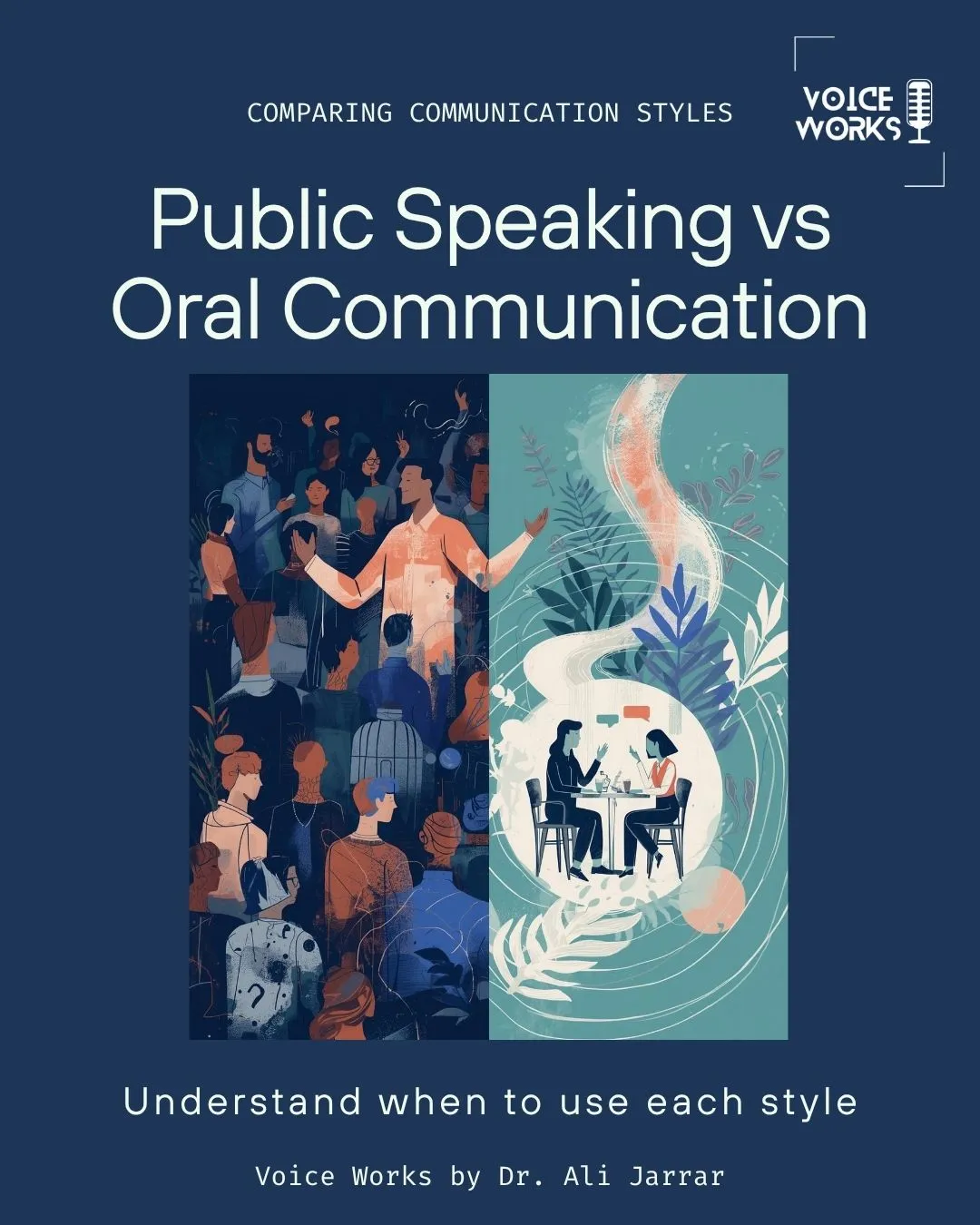
Let’s begin with the basics. Public speaking is a planned form of communication delivered to a group, often using visual aids or storytelling to connect with the audience. Oral communication, on the other hand, can be spontaneous or casual, taking place in conversations, interviews, or discussions.
Public speaking focuses on performance and persuasion, while oral communication emphasizes interaction and understanding.
Core Differences Between Public Speaking and Oral Communication
| Aspect | Public Speaking | Oral Communication |
| Definition | A structured speech delivered to an audience | Exchange of ideas through spoken words |
| Setting | Formal — conferences, events, or classrooms | Informal — conversations, meetings, or interviews |
| Purpose | To inform, persuade, or motivate | To share, clarify, or understand information |
| Audience Size | Usually larger | Often one-on-one or small groups |
| Structure | Preplanned and rehearsed | Spontaneous and flexible |
| Tools Used | Visual aids, microphones, slides | Voice, tone, and body language |
| Skills Required | Confidence, organization, storytelling | Listening, empathy, articulation |
Explaining the Table in Practice
Imagine two scenarios.
In the first, you’re giving a motivational talk at a company event — that’s public speaking. You’ve rehearsed your key points, prepared visuals, and crafted your message for maximum impact.
In the second, you’re discussing project ideas with a colleague — that’s oral communication. It’s collaborative, quick, and naturally flowing.
Both require skill and confidence, but public speaking vs oral communication differs in scale, structure, and intent. Developing both helps you become a complete communicator — capable of addressing an audience or engaging in one-on-one conversations with clarity and authenticity.
Skills and Techniques for Both Forms
To strengthen both forms of communication, focus on verbal clarity by practicing concise expression, that is saying more with less, this helps your listeners grasp your message faster. Pay attention to your body language by recording and observing yourself, which improves your confidence and presence. Sharpen your listening skills by engaging in active dialogues, allowing deeper understanding. Incorporate audience engagement through interactive moments, creating stronger connections. Finally, build confidence by joining speaking clubs or training sessions, it’s the best way to overcome fear and master both oral communication and public speaking.
Why These Skills Matter
Mastering both oral communication and public speaking unlocks opportunities in every part of life, from interviews to leadership roles. It’s not just about speaking well; it’s about connecting well. Whether you’re presenting to a crowd or having a one-on-one discussion, effective communication skills are your bridge to influence, empathy, and understanding.
Frequently Asked Questions
Q1. What is the difference between oral communication and public speaking?
Oral communication is any form of spoken exchange, like conversations or discussions, while public speaking is a formal, structured presentation delivered to an audience.
Q2. Is public speaking a form of oral communication?
Yes, public speaking is a specialized form of oral communication that focuses on delivering a message to a larger group with purpose and preparation.
Q3. Which is more effective: oral communication or public speaking?
Both are effective in their own ways. Oral communication helps in personal and professional interactions, while public speaking is ideal for motivating, educating, or influencing an audience.
Q4. What are examples of oral communication in daily life?
Examples include team meetings, phone conversations, interviews, and casual discussions — all of which rely on active listening, tone, and clarity.
Conclusion
In the end, both oral communication and public speaking share the same heartbeat — connection. The difference lies in scale and structure. Whether you’re speaking to one person or a thousand, your goal remains the same: to make your message resonate with authenticity, confidence, and warmth.
Gracias!